This is a great video of Reggie & Stephen Housden playing and discussing "Son of a Preacher Man" -- it's a clip from Vision 4 Music's DVD series entitled "Top of the Fret."
http://www.youtube.com/watch?v=nRxdixMc5nI
http://www.vision4music.com/store/product_info.php?cPath=21&products_id=39
Sunday, April 27, 2008


Saturday, April 26, 2008
Reissue of Memphis Boys Recording
The 1990 release entitled "The Memphis Boys" has just been re-issued. Read about it here...(and listen to samples!)...
http://www.virtualmusicmarket.com/Memphis%20Boys%20Download%20Page.htm
http://www.virtualmusicmarket.com/Memphis%20Boys%20Download%20Page.htm
Saturday, April 19, 2008
Sunday, March 09, 2008
Video Footage of Elvis at Memphis
Check out this little gem -- it's only 46 seconds long but shows the American guys with Elvis around the time of Elvis's Memphis Recordings (1969). Cogbill, Chrisman, Emmons, and Young are in there -- though very briefly.
http://www.youtube.com/watch?v=L_WzVZZthBU
http://www.youtube.com/watch?v=L_WzVZZthBU
Saturday, January 19, 2008
Great Posts on Red Kelly Blog
I've linked to Red Kelly's blog in the past, but I wanted to draw your attention to two recent posts covering Chips Moman and the history of American Studio. Red is a great writer and a true music scholar. This is another must read for fans of American and/or Chips Moman. A fabulous job Red!
http://redkelly.blogspot.com/2008/01/
elvis-presley-any-day-now-rca-9741.html
http://redkelly.blogspot.com/2008/
01/triumphs-raw-dough-volt-100.html
http://redkelly.blogspot.com/2008/01/
elvis-presley-any-day-now-rca-9741.html
http://redkelly.blogspot.com/2008/
01/triumphs-raw-dough-volt-100.html
Saturday, December 29, 2007
Home Movies of the Hall of Fame Induction Ceremony
Several home movies of the Hall of Fame Induction Ceremony -- featuring a video of Dan Penn singing!
http://www.myspace.com/youngguitar
Reggie's acceptance speech also posted on YouTube:
http://www.youtube.com/watch?v=R-UqEKUrESY
[UPDATE 5/17/08: This video has been removed from YouTube's site]
http://www.myspace.com/youngguitar
Reggie's acceptance speech also posted on YouTube:
http://www.youtube.com/watch?v=R-UqEKUrESY
[UPDATE 5/17/08: This video has been removed from YouTube's site]
Sunday, December 23, 2007
Additional Post about the Hall of Fame Induction Ceremony
That's Garth singing -- Reggie is pictured on the right...

http://www.cmt.com/artists
/news/1575159/20071127/wynette_tammy.jhtml

http://www.cmt.com/artists
/news/1575159/20071127/wynette_tammy.jhtml
Saturday, December 08, 2007

Monday, November 19, 2007
Waylon Pays Tribute to Reggie
Check this out -- Waylon has nice words to say about Reggie -- then the band performs "Drift Away" complete with all Reggie's licks from the Dobie Gray version...
http://www.youtube.com/watch?v=YeLZMHqS27g
[UPDATE 5/17/08: This video has apparently been removed from YouTube -- the following message is displayed: "This video has been removed due to terms of use violation."]
Update 8/15/09 -- the same video mentioned above is now here:
http://www.youtube.com/watch?v=4m5GLU-zEuI
http://www.youtube.com/watch?v=YeLZMHqS27g
[UPDATE 5/17/08: This video has apparently been removed from YouTube -- the following message is displayed: "This video has been removed due to terms of use violation."]
Update 8/15/09 -- the same video mentioned above is now here:
http://www.youtube.com/watch?v=4m5GLU-zEuI
Friday, November 16, 2007
Updated Info on Musician's Hall of Fame Concert
The Musicians Hall Of Fame And Museum is the one and only museum in the world that honors the talented musicians who actually played on the greatest recordings of all time. On this special evening they will host the first annual Musicians Hall of Fame Award Show. The 2007 Inductees, who will also be performing, are: The Blue Moon Boys, The Funk Brothers, The Memphis Boys, The Nashville A-Team, The Tennessee Two and The Wrecking Crew. In addition to the inductees, the following musicians will be performing: Garth Brooks, Rodney Crowell, Vince Gill, Amy Grant, Peter Frampton, John Carter Cash, Roger McGuinn and B.J. Thomas. Presented by Creed Bratton (The Office) and Brenda Lee.
http://www.nashvillesymphony.org/main.taf?p=1,1,3,1,4,3&PerfNo=1389
http://www.nashvillesymphony.org/main.taf?p=1,1,3,1,4,3&PerfNo=1389
Saturday, November 03, 2007
Sunday, October 28, 2007
Saturday, October 27, 2007
Memphis Boys Inducted into Musician's Hall of Fame
Great news! Memphis Boys inducted into Musicians Hall of Fame:
Here's a quote from the CMT website:
The first Musicians Hall of Fame Awards show will be held Nov. 26 at Schermerhorn Symphony Center in downtown Nashville. The inductees include the Nashville A-Team, Blue Moon Boys, Funk Brothers, Memphis Boys, Tennessee Two and Wrecking Crew. Special guest vocalists for the ceremony will be announced soon. The voting process involved recording professionals from all genres and areas of the music industry. The ballots were distributed last year to determine the nominees, and then an advisory board comprised of music industry professionals determined the inductees.
http://www.cmt.com/news/articles
/1572894/20071026/id_0.jhtml
Here's a quote from the CMT website:
The first Musicians Hall of Fame Awards show will be held Nov. 26 at Schermerhorn Symphony Center in downtown Nashville. The inductees include the Nashville A-Team, Blue Moon Boys, Funk Brothers, Memphis Boys, Tennessee Two and Wrecking Crew. Special guest vocalists for the ceremony will be announced soon. The voting process involved recording professionals from all genres and areas of the music industry. The ballots were distributed last year to determine the nominees, and then an advisory board comprised of music industry professionals determined the inductees.
http://www.cmt.com/news/articles
/1572894/20071026/id_0.jhtml
Saturday, October 20, 2007
Elvis's American Studio Sessions by Stephen Rudko
Stephen Rudko's article from www.furious.com -- nice account of Elvis's American Studio sessions.
http://www.furious.com/PERFECT/elvis69.html
http://www.furious.com/PERFECT/elvis69.html
Saturday, October 13, 2007
More Pics from American Sound Show
Here are more pictures from the Elvis American Sound Show in Soest, Germany -- held in March 07.
http://www.elvis-presley-gesellschaft.de
/html/AmericanSoundShow_Bericht.htm
http://www.elvis-presley-gesellschaft.de
/html/AmericanSoundShow_Bericht.htm
Saturday, September 01, 2007

Photos from April 2007 Planet Hollywood Concert
Check this out -- photos of all the Memphis Boys taken in Paris during the Planet Hollywood concert (April 2007).
http://highwayfm.free.fr/ELVIS-PLANET-HOLLYWOOD/index.html
http://highwayfm.free.fr/ELVIS-PLANET-HOLLYWOOD/index.html
Memphis Boys Soest / Germany Performance Live on CD
[UPDATE 5/17/08: This item is no longer on EBay]
http://cgi.ebay.co.uk/Elvis-American-Sound-Show
-2CD-NEW-2007-Live-The-King_W0QQitemZ120155916630QQcmdZViewItem

http://cgi.ebay.co.uk/Elvis-American-Sound-Show
-2CD-NEW-2007-Live-The-King_W0QQitemZ120155916630QQcmdZViewItem

Wednesday, August 15, 2007
Elvis in Memphis -- from 'Boogie Woogie Flu'
Listen to Elvis in Memphis cuts from 'Boogie Woogie Flu' blog:
http://boogiewoogieflu.blogspot.com/2007/08/elvis-1969.html

http://boogiewoogieflu.blogspot.com/2007/08/elvis-1969.html

Premier Guitar Interview with Reggie Young
From the September '07 issue of Premier Guitar magazine:
http://magazine.premierguitar.com/Magazine
/Issue/2007/Sep/Forever_Young_Reggie_Young.aspx
Reggie with friends:

http://magazine.premierguitar.com/Magazine
/Issue/2007/Sep/Forever_Young_Reggie_Young.aspx
Reggie with friends:

Saturday, August 11, 2007
Google Books
This is way cool!! Go to Google Books and get viewable excerpts from books. A search on Chips Moman gave 158 hits. American Sound Studio gave 9 hits. A search on Gene Chrisman gave 17 hits, but not all of them were 'our' Gene. Have fun with this site...but don't believe everything you read! And don't forget to use quotes around your search terms - this cuts out all the extraneous stuff.
http://books.google.com/
http://books.google.com/
Dark End of the Street
Good blog post about the writing and recording of James Carr's Dark End of the Street:
http://testifyse15.blogspot.com/search?q=moman
http://testifyse15.blogspot.com/search?q=moman
Chips Moman Encyclopedia Article
The Georgia Encyclopedia's entry on LaGrange native Chips Moman:
http://www.georgiaencyclopedia.org/nge/Article.jsp?id=h-1721
http://www.georgiaencyclopedia.org/nge/Article.jsp?id=h-1721
American Studio Discography
Good discography site featuring (among many others) the output of the Goldwax (James Carr), Mala (Box Tops, Bobby Wood), and Bell (James & Bobby Purify and Oscar Toney, Jr) labels. These were some of American's earliest recordings from 1966-1968 (all the above appear under the Bell Label heading):
http://www.bsnpubs.com/discoga-c.html
Then go here for listings on the Scepter label featuring BJ Thomas and Dionne Warwick's American recordings:
http://www.bsnpubs.com/discogs-z.html
Or go here for the Minit Label (Bobby Womack's American Recordings):
http://www.bsnpubs.com/discogl-r.html
Lots more here -- worth the effort!
http://www.bsnpubs.com/discoga-c.html
Then go here for listings on the Scepter label featuring BJ Thomas and Dionne Warwick's American recordings:
http://www.bsnpubs.com/discogs-z.html
Or go here for the Minit Label (Bobby Womack's American Recordings):
http://www.bsnpubs.com/discogl-r.html
Lots more here -- worth the effort!
Friday, August 03, 2007
Memphis Boys CD
Here's a picture of the cover art from the CD that the Memphis Boys recorded in '92...


Wednesday, August 01, 2007
Elvis's American Studio Recordings
A bunch of information is available at this site regarding Elvis's studio recordings. Click on the link below and then scroll till you get to January 13, 1969, which is the date of the first session Elvis recorded at American.
http://www.elvisrecordings.com/master2c.htm
http://www.elvisrecordings.com/master2c.htm
Saturday, July 28, 2007
All Memphis Music
Great radio site that features ALL Memphis music:
http://www.allmemphismusic.com/
You can play the station using Windows Media Player or download the Live365 player.
http://www.allmemphismusic.com/
You can play the station using Windows Media Player or download the Live365 player.

Saturday, July 07, 2007
More Highwaymen Videos
For more Highwaymen (i.e. Cash, Nelson, Kristofferson, Jennings) videos go to this link:
http://www.youtube.com/user/Slasheri
Most of the Highwaymen videos listed feature the backing of the Memphis Boys. Enjoy!
http://www.youtube.com/user/Slasheri
Most of the Highwaymen videos listed feature the backing of the Memphis Boys. Enjoy!
Friday, July 06, 2007
Thomas Street History
Preston over at the MemphisSound blog had a cool post about the history of Thomas Street -- also known as New Chicago. Some great history here -- check it out!
http://memphissound.blogspot.com/2007/06/
curries-club-tropicana.html
http://memphissound.blogspot.com/2007/06/
curries-club-tropicana.html
Rhino Records' Guide To Memphis
See the blurb about American in the 'Ghost Hunting' section -- here's a quote:
http://www.rhino.com/rzine/StoryKeeper.lasso?StoryID=934
This link provides an excellent all-around guide to Memphis' music-related sites.
Ghost hunting: American Recording Studio 827 Thomas St. (at Chelsea). The only Memphis studio which truly ever rivaled Stax or Sun for importance, American—founded by Memphis music legend "Chips" Moman—attracted Wilson Pickett, the Box Tops, Dusty Springfield, Neil Diamond, and yes, Elvis, who made some of his best post-Sun music here.
http://www.rhino.com/rzine/StoryKeeper.lasso?StoryID=934
This link provides an excellent all-around guide to Memphis' music-related sites.
Picture of Bobby Wood's Wurlitzer Piano
Go here for blurbs (and pictures) of Bobby Wood's Wurlitzer electric piano. Tip: scroll about 2/3 of the way down...this is from the Nashville Musician's Hall of Fame and Museum. Also has pictures of Reggie's guitars as well as instruments from many other studio greats.
http://www.scottymoore.net/mhofm.html
http://www.scottymoore.net/mhofm.html
Saturday, June 30, 2007
Rediscovered R&B Classic
Read about the Dynamics First Landing LP recorded at American in 1969 and recently re-released:
http://somevelvetblog.blogspot.com/2007/06/
rediscovered-lost-classic-of-r.html
http://somevelvetblog.blogspot.com/2007/06/
rediscovered-lost-classic-of-r.html
Saturday, June 16, 2007
Bobby Womack on his experience at American
this is extracted from the Eddie Hankins article on the Memphis Boys...link to the entire article is in an earlier post (see below)...


Friday, June 15, 2007
Check out this Blog
I came across this blog recently and thoroughly enjoyed it. The author is a Memphis-based journalist who's done some great articles about the local music scene.
http://memphissound.blogspot.com
Read the entries -- several talk about the early days of Stax when Chips Moman was in residence. I also enjoyed the post about Hi Session man Howard Grimes.
http://memphissound.blogspot.com
Read the entries -- several talk about the early days of Stax when Chips Moman was in residence. I also enjoyed the post about Hi Session man Howard Grimes.
Saturday, April 21, 2007
www.chipsmoman.com
Chips Moman had a great web site in 2001 and 2002...there's still a site out there by that name (www.chipsmoman.com) but there's no content to view...however, you can see some of the content from the archives of the old site by clicking here.
Or for a more thorough look go here:
http://web.archive.org/web/*sr_1nr_10/http://chipsmoman.com/*
Or for a more thorough look go here:
http://web.archive.org/web/*sr_1nr_10/http://chipsmoman.com/*
Elvis Australia Interview with Reggie Young
Really good interview but quite a few misspellings...probably transcribed from tape...well worth reading.
http://www.elvis.com.au/presley/
interview_reggie_young.shtml
http://www.elvis.com.au/presley/
interview_reggie_young.shtml
Saturday, April 14, 2007
Memphis Boys @ 1967 Oscar Toney Jr. Session
This is a rare find. You won't see this on E-Bay :) It's a scanned image of the Oscar Toney For Your Precious Love album.
Bobby Wood did not play on this particular session (he hadn't officially joined American yet), but he generously signed the album anyway.
Check out the letter of congratulations from Otis Redding!

Bobby Wood did not play on this particular session (he hadn't officially joined American yet), but he generously signed the album anyway.
Check out the letter of congratulations from Otis Redding!

Saturday, March 31, 2007
Waylon Jennings - Trouble Man
This is great--Waylon Jennings singing "Trouble Man" backed by the Memphis Boys. The video is from the Highwaymen tour (Waylon, Willie Nelson, Johnny Cash, and Kris Kristofferson). You can see Gene on drums and Bobby W. and E. on keyboards at about 2:00 minutes into the video--Reggie Y. is seen throughout. I believe that's Mike Leech standing to the left of Gene--but he's hard to identify.
Sunday, March 25, 2007
Johnny Cash -- The Man in Black
Here's a wonderful site from Peter Lewry that pays tribute to Johnny Cash. Features interviews with numerous people who worked with him over the years -- including Reggie Young.
http://www.johnnycashfanzine.com/reggieyoung.html
http://www.johnnycashfanzine.com/reggieyoung.html
Tuesday, March 20, 2007
Planet Hollywood (Paris, France)
Info on the Planet Hollywood concert in Paris, France (April 1, 2007) is here:
http://www.elvismyhappiness.com/index.php?option=com_content&task=view&id=857&Itemid=64
http://www.elvismyhappiness.com/index.php?option=com_content&task=view&id=857&Itemid=64
Link to the Stadthalle (Soest, Germany)
Here's a link to the Stadthalle in Soest, Germany -- where the Memphis Boys are playing on March 31, 2007.
http://www.stadthallesoest.de
http://www.stadthallesoest.de
Memphis Boys European Tour Dates
The Memphis Boys are playing two shows in Europe on March 31st and April 1st, 2007.
On Saturday, March 31st, they play in Soest, Germany (near the city of Dortmund) at the "Stadthalle", Dasselwall 1, Soest, Germany. Doors open at 6:00 PM and the show is at 8:00 PM.
On Sunday, April 1st, they play in Paris, France at the "Planet Hollywood" venue on the Champs Elysees. Doors open at 1:30 PM and the show is at 3:30 PM.
Stay tuned for more -- and thanks to Gene C. for the info!
On Saturday, March 31st, they play in Soest, Germany (near the city of Dortmund) at the "Stadthalle", Dasselwall 1, Soest, Germany. Doors open at 6:00 PM and the show is at 8:00 PM.
On Sunday, April 1st, they play in Paris, France at the "Planet Hollywood" venue on the Champs Elysees. Doors open at 1:30 PM and the show is at 3:30 PM.
Stay tuned for more -- and thanks to Gene C. for the info!
Tuesday, March 06, 2007
I Wish I Knew -- Solomon Burke

You've got to go here and listen to this sound file.
This is from Red Kelly's blog and he's posting about the fabulous Solomon Burke (who's still singing great!). There's a link to a sound file of "Save It" (just underneath the image of the 45), which was recorded at American (in 1968) and included on the album "I Wish I Knew."
I love the way Gene's drumming propels the whole track and keeps the intensity level high. But Gene does that on a daily basis.
Just listen and see for yourself!
Monday, February 12, 2007
American Studio Site -- February 7, 2007

Here's a photo taken at Chelsea and Thomas Street in Memphis -- where American once stood. This is not the original building.
This building was a day care center at one time ("Children's Palace Learning Academy"). The address is 831 Thomas Street.
Photo taken on Wednesday, February 7, 2007.
It appears that I'm not the only one who's photographed the former American site:
http://travel.webshots.com/photo/2737295830099855274aFeBey
Thursday, January 25, 2007
Messick High School

Here's a picture of Messick High School in Memphis, Tennessee.
Question:
Name three famous Memphis musicians who are Messick alumni.
Answer:
Reggie Young, Steve Cropper, and Duck Dunn. . .
I wish I'd gone to school there. :)
Wednesday, January 10, 2007
Sound Samples "From Elvis in Memphis"
Sound samples of "From Elvis in Memphis" CD. . .lots more good stuff here -- sounds as good as the day it was recorded. . .in 1969!
http://www.cduniverse.com/productinfo.asp?pid=1112070&BAB=Y
http://www.cduniverse.com/productinfo.asp?pid=1112070&BAB=Y
Thursday, January 04, 2007
Wilson Pickett Sound Samples
Here are links to sound samples from two of my favorite Wilson Pickett albums from the mid-sixties. These were done at American and the guys are just fantastic on all these cuts. Just give a listen:

http://www.cduniverse.com/productinfo.asp?pid=6998917&BAB=E

http://www.cduniverse.com/productinfo.asp?pid=4865034&BAB=E
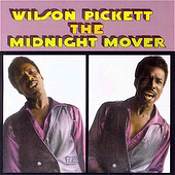
http://www.cduniverse.com/productinfo.asp?pid=6998917&BAB=E
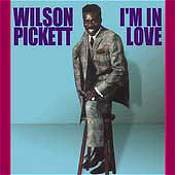
http://www.cduniverse.com/productinfo.asp?pid=4865034&BAB=E
Wednesday, September 06, 2006
Interesting post about James Carr sessions
This post talks about the James Carr sessions -- recorded at Hi because American's board was being repaired. Several posts by Colin Dilnot, who is an expert in this area, and also a post from Neil Rushton, who interviewed Dan Penn for UK's Manifesto magazine.
http://www.soul-source.co.uk/forum/lofiversion/index.php/t15128.html
http://www.soul-source.co.uk/forum/lofiversion/index.php/t15128.html
Friday, August 04, 2006

Interview with Mike Leech
Here's a 2005 interview with Mike Leech, which appeared in an Italian webzine....
http://www.ilmarchiodelleidee.com/readinter.php?ID=19
http://www.ilmarchiodelleidee.com/readinter.php?ID=19
Sunday, July 16, 2006
Bobby Wood Interview
Bobby Wood talks about recording with Elvis. Reprinted by Elvis Australia web site from the archives of www.elvisworld-japan.com.
http://www.elvis.com.au/presley/interview_bobby_wood.shtml
http://www.elvis.com.au/presley/interview_bobby_wood.shtml
Papa Don Schroeder Interview
A must-read interview with Papa Don Schroeder. Papa Don was, among other things, a disc jockey in Pensacola, Florida. His show was called "the Papa Ding-Dong Diddley Daddy Debatably Daring Dig’in Out Dash’n Dip Dig’in Don Schroeder Show." Gotta love it! In the mid-sixties, Papa Don brought Oscar Toney and James & Bobby Purify to American Studios. Read about it here:
http://www.sundazed.com/scene
/exclusives/papa_don_exclusive.html
http://www.sundazed.com/scene
/exclusives/papa_don_exclusive.html
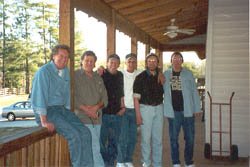
Sunday, June 18, 2006
Vintage Guitar Interview with Reggie Young
Comprehensive interview with Reggie from September 2001 issue of Vintage Guitar magazine.
http://www.vintageguitar.com/2837/reggie-young/
http://www.vintageguitar.com/2837/reggie-young/
Saturday, June 17, 2006
Bass Player Magazine Article on Tommy Cogbill
Great article by session bassist Michael Rhodes -- wonderful tribute to Tommy Cogbill.
http://www.bassplayer.com/story.asp?storyCode=13259
Note (5/1/2011) -- above link doesn't work -- here's a new link to the story below:
http://www.bassplayer.com/article/dusty-springfields-son/feb-06/18128
Note (8/10/13) -- this article keeps disappearing! Try here:
http://web.archive.org/web/20060325155615/http://www.bassplayer.com/story.asp?storyCode=13259
Tommy Cogbill’s Complete Bass Line
Dusty Springfield’s ‘Son Of A Preacher Man’
By Chris Jisi | February, 2006
Top Nashville session bassist Michael Rhodes discusses the masters of his craft, and a personal mentor, with a gleam in his eye. “There are plenty of correlations between James Jamerson and Tommy Cogbill, including their jazz backgrounds and their parallel careers. Like James, Tommy was a take-charge guy in the studio; he would stand up and count off the songs, and basically run the session. He had such a strong presence in the music he played that there was a sort of natural deference by the rest of the band.” Of course, Jamerson’s prowess and genius have since been well documented in books, on CDs, and on film; Cogbill is still relatively unknown by name, although not by bass line. His trademark busy-yet-unimposing parts graced Wilson Pickett’s “Funky Broadway,” Elvis Presley’s “Kentucky Rain” and “In the Ghetto,” the Box Tops’ “Cry Like a Baby,” and Aretha Franklin’s “(You Make Me Feel Like a) Natural Woman,” “Chain of Fools,” and “Respect” [see April ’99].
Born on April 8, 1932, in Johnson Grove, Tennessee, Cogbill started on guitar at age six and picked up electric bass—among other stringed instruments—along the way. Settling into a regular rhythm section with guitarists Reggie Young and Chips Moman, keyboardist Bobby Emmons, and drummer Gene Chrisman, the team became in demand in Memphis, Nashville, New York, and at Fame Studio in Muscle Shoals, Alabama. In 1967, Moman bought American Sound Studios in Memphis, and artists came from far and wide to work with the quintet. Cogbill eventually added producing to his skills, most notably behind the board for Neil Diamond’s Sweet Caroline. On December 7, 1982, at age 50, he succumbed to a stroke.
Two years earlier, in Nashville, Cogbill met newcomer Rhodes on a session and took him under his wing. Says Michael, “Tommy taught me everything from studio demeanor to the role of the bass player. He innately knew how to approach a track and make it work. He was a soft-spoken, laid-back guy, but with a bass in his hands he had the intuitive ability to create forward motion through a song that enabled everyone else to surf in the wake. There’s probably no better example of that than ‘Son of a Preacher Man.’” The 1969 Top Ten hit came from British pop/soul singer Dusty Springfield’s album Dusty in Memphis [Mercury]; it’s considered her masterpiece, although it was her last major hit. Rhodes, who spoke to Reggie Young and bassist Mike Leech (who was at the session), gathered some interesting background info on the late-1968 date at American Sound:
“There probably weren’t a lot of takes done, because [producer] Jerry Wexler, [engineer/arranger/ co-producer] Tom Dowd, and [songwriter] John Hurley were present, so there was a better degree of direction. The rhythm section [Cogbill, Young, Chrisman, and Emmons and Bobby Wood on keyboards] recorded live to a scratch vocal by Dusty, who—being somewhat out of her element—was reportedly as nervous as a cat in a room full of rocking chairs. The band came up with their own parts, including Tommy, who consequently drove the whole track in typical fashion.” Rhodes continues, “Gear-wise, Tommy used Chip Moman’s 1959 P-Bass, which had a rosewood neck and flatwound strings. It was the American Studios bass; Mike Leech has it now [see photo, page 82]. Mike said Tommy also kept a jar of Vaseline on hand, and he would stick his right fingers into it to help facilitate his technique. Reggie remembers there being a bass amp at the session, and with Dowd present there was probably a direct as well as a miked amp signal. Interestingly, Leech recalled that on the earlier American Studios stuff, Tommy’s bass was recorded through an old Fender Twin Reverb that had one of its two 12" speakers busted and disconnected. They would place a mic, probably a Shure SM57, off axis of the single speaker and keep the amp at a low volume.”
The two-and-half-minute “Preacher Man” begins with intro interplay between Young’s guitar lick on the downbeat and Cogbill’s instantly funky response in the back half of the bars. For the first verse, at letter A, Cogbill remains busy but never gets in Springfield’s way. Rhodes offers, “What strikes me is how sparse and laid back the track is, except for Tommy. He takes up the bulk of real estate and gives the piece a sense of urgency and excitement. You can hear Gene Chrisman and everyone sort of following Tommy because he’s in the zone, right in the middle of the pocket, with an occasional lean.” As the track moves to the first chorus, at B, Cogbill continues his syncopated ways. At times he adds the dominant 7 (D) to the E triad chord change, as well as expressive hammer-ons and slurs. In bars 16 and 17 he breaks down to half-notes, in sync with the vocals, providing the perfect release to the previous rhythmic tension. Notes Rhodes, “The fact that Tommy is playing around the E up at the 7th fret tells me these guys had heard themselves on the radio and knew what translated. If he had played open E it might not have reproduced as well in a car or on a transistor radio. And given that Tommy also played wicked bebop-style guitar, navigating on the upper fingerboard was no sweat.”
Following a re-intro at bars 18 and 19 (in which horns enter and cop Young’s guitar lick), Cogbill continues his percolating part—with subtle variations—through the second verse and chorus (letters C and D). At E, the bridge begins, in what is a clever setup for a modulation a 4th away, to the key of A. Cogbill keeps driving forward, and in bar 33 he issues an ear-catching 5th on the downbeat, followed by a jazzy passing tone. Letter F’s third chorus establishes the new key of A, with Cogbill maintaining motion and adding a cool subtlety: Every time he arrives at the IV chord (D), he outlines a D triad (D-F#-A). His inspired, bluesy fill in bar 41 is a precursor to the out chorus at G. Rhodes assesses, “Tommy felt the final chorus needed to go into another gear, and he knew he had to get right to it before the quick fade. Moving up to a more vocal, conversational register, he plays a linear fill across the bar line from 47 to 48 without worrying about nailing the roots. This happens even more dramatically in bars 51 to 52—you can feel the joy. I would have loved to hear the next eight bars!” Rhodes sums up, “Tommy’s playing was always headed toward something—the next chord change or the next section. In retrospect, his playing was heading toward the future of electric bass.”
Mike Leech On Tommy Cogbill
“Tommy Cogbill’s profile has always been subdued—as he wanted it to be. However, from a historical perspective, he should be listed among the top-five most important popular-music bassists of the last century. He’s the only player I know who was able to use his knowledge on guitar, transpose it to bass, and make it believable. His dynamic interpretation on bass was uncanny; his sense of time was amazing. After a cut, when he had played something outstanding (such as the bass line on “Memphis Soul Stew”) and compliments were paid, he never claimed all the credit. He always passed credit around, usually by saying something like, ‘pretty funky groove, huh?’
“Thomas Clark Cogbill was a father figure to me. During the many hours we sat and talked, bass technique seldom came up; musicianship between us was secondary. When I was down, he had advice to get me back up; if he saw me heading in a bad direction, he would point a finger in my face and order me to either stop or change my direction. Being a musician is not just a career move but a lifestyle, and that is what dictates your abilities. That’s what Tommy taught me—not how to play, but how to live.”
Mike Leech’s resumé ranges from Elvis Presley and Jerry Lee Lewis to Willie Nelson, Merle Haggard, and Johnny Cash, and includes Neil Diamond’s “Sweet Caroline.”
Michael Rhodes
In addition to appearing on recent CDs by Trisha Yearwood, Brooks & Dunn, Gretchen Wilson, Rodney Crowell, Randall Bramblett, and the Vinyl Kings, Nashville session ace Michael Rhodes can be heard on Larry Carlton’s latest, Firewire [Arista], and Vince Gill’s upcoming CD and tour.
Back to previous page Print
http://www.bassplayer.com/story.asp?storyCode=13259
Note (5/1/2011) -- above link doesn't work -- here's a new link to the story below:
http://www.bassplayer.com/article/dusty-springfields-son/feb-06/18128
Note (8/10/13) -- this article keeps disappearing! Try here:
http://web.archive.org/web/20060325155615/http://www.bassplayer.com/story.asp?storyCode=13259
Tommy Cogbill’s Complete Bass Line
Dusty Springfield’s ‘Son Of A Preacher Man’
By Chris Jisi | February, 2006
Top Nashville session bassist Michael Rhodes discusses the masters of his craft, and a personal mentor, with a gleam in his eye. “There are plenty of correlations between James Jamerson and Tommy Cogbill, including their jazz backgrounds and their parallel careers. Like James, Tommy was a take-charge guy in the studio; he would stand up and count off the songs, and basically run the session. He had such a strong presence in the music he played that there was a sort of natural deference by the rest of the band.” Of course, Jamerson’s prowess and genius have since been well documented in books, on CDs, and on film; Cogbill is still relatively unknown by name, although not by bass line. His trademark busy-yet-unimposing parts graced Wilson Pickett’s “Funky Broadway,” Elvis Presley’s “Kentucky Rain” and “In the Ghetto,” the Box Tops’ “Cry Like a Baby,” and Aretha Franklin’s “(You Make Me Feel Like a) Natural Woman,” “Chain of Fools,” and “Respect” [see April ’99].
Born on April 8, 1932, in Johnson Grove, Tennessee, Cogbill started on guitar at age six and picked up electric bass—among other stringed instruments—along the way. Settling into a regular rhythm section with guitarists Reggie Young and Chips Moman, keyboardist Bobby Emmons, and drummer Gene Chrisman, the team became in demand in Memphis, Nashville, New York, and at Fame Studio in Muscle Shoals, Alabama. In 1967, Moman bought American Sound Studios in Memphis, and artists came from far and wide to work with the quintet. Cogbill eventually added producing to his skills, most notably behind the board for Neil Diamond’s Sweet Caroline. On December 7, 1982, at age 50, he succumbed to a stroke.
Two years earlier, in Nashville, Cogbill met newcomer Rhodes on a session and took him under his wing. Says Michael, “Tommy taught me everything from studio demeanor to the role of the bass player. He innately knew how to approach a track and make it work. He was a soft-spoken, laid-back guy, but with a bass in his hands he had the intuitive ability to create forward motion through a song that enabled everyone else to surf in the wake. There’s probably no better example of that than ‘Son of a Preacher Man.’” The 1969 Top Ten hit came from British pop/soul singer Dusty Springfield’s album Dusty in Memphis [Mercury]; it’s considered her masterpiece, although it was her last major hit. Rhodes, who spoke to Reggie Young and bassist Mike Leech (who was at the session), gathered some interesting background info on the late-1968 date at American Sound:
“There probably weren’t a lot of takes done, because [producer] Jerry Wexler, [engineer/arranger/ co-producer] Tom Dowd, and [songwriter] John Hurley were present, so there was a better degree of direction. The rhythm section [Cogbill, Young, Chrisman, and Emmons and Bobby Wood on keyboards] recorded live to a scratch vocal by Dusty, who—being somewhat out of her element—was reportedly as nervous as a cat in a room full of rocking chairs. The band came up with their own parts, including Tommy, who consequently drove the whole track in typical fashion.” Rhodes continues, “Gear-wise, Tommy used Chip Moman’s 1959 P-Bass, which had a rosewood neck and flatwound strings. It was the American Studios bass; Mike Leech has it now [see photo, page 82]. Mike said Tommy also kept a jar of Vaseline on hand, and he would stick his right fingers into it to help facilitate his technique. Reggie remembers there being a bass amp at the session, and with Dowd present there was probably a direct as well as a miked amp signal. Interestingly, Leech recalled that on the earlier American Studios stuff, Tommy’s bass was recorded through an old Fender Twin Reverb that had one of its two 12" speakers busted and disconnected. They would place a mic, probably a Shure SM57, off axis of the single speaker and keep the amp at a low volume.”
The two-and-half-minute “Preacher Man” begins with intro interplay between Young’s guitar lick on the downbeat and Cogbill’s instantly funky response in the back half of the bars. For the first verse, at letter A, Cogbill remains busy but never gets in Springfield’s way. Rhodes offers, “What strikes me is how sparse and laid back the track is, except for Tommy. He takes up the bulk of real estate and gives the piece a sense of urgency and excitement. You can hear Gene Chrisman and everyone sort of following Tommy because he’s in the zone, right in the middle of the pocket, with an occasional lean.” As the track moves to the first chorus, at B, Cogbill continues his syncopated ways. At times he adds the dominant 7 (D) to the E triad chord change, as well as expressive hammer-ons and slurs. In bars 16 and 17 he breaks down to half-notes, in sync with the vocals, providing the perfect release to the previous rhythmic tension. Notes Rhodes, “The fact that Tommy is playing around the E up at the 7th fret tells me these guys had heard themselves on the radio and knew what translated. If he had played open E it might not have reproduced as well in a car or on a transistor radio. And given that Tommy also played wicked bebop-style guitar, navigating on the upper fingerboard was no sweat.”
Following a re-intro at bars 18 and 19 (in which horns enter and cop Young’s guitar lick), Cogbill continues his percolating part—with subtle variations—through the second verse and chorus (letters C and D). At E, the bridge begins, in what is a clever setup for a modulation a 4th away, to the key of A. Cogbill keeps driving forward, and in bar 33 he issues an ear-catching 5th on the downbeat, followed by a jazzy passing tone. Letter F’s third chorus establishes the new key of A, with Cogbill maintaining motion and adding a cool subtlety: Every time he arrives at the IV chord (D), he outlines a D triad (D-F#-A). His inspired, bluesy fill in bar 41 is a precursor to the out chorus at G. Rhodes assesses, “Tommy felt the final chorus needed to go into another gear, and he knew he had to get right to it before the quick fade. Moving up to a more vocal, conversational register, he plays a linear fill across the bar line from 47 to 48 without worrying about nailing the roots. This happens even more dramatically in bars 51 to 52—you can feel the joy. I would have loved to hear the next eight bars!” Rhodes sums up, “Tommy’s playing was always headed toward something—the next chord change or the next section. In retrospect, his playing was heading toward the future of electric bass.”
Mike Leech On Tommy Cogbill
“Tommy Cogbill’s profile has always been subdued—as he wanted it to be. However, from a historical perspective, he should be listed among the top-five most important popular-music bassists of the last century. He’s the only player I know who was able to use his knowledge on guitar, transpose it to bass, and make it believable. His dynamic interpretation on bass was uncanny; his sense of time was amazing. After a cut, when he had played something outstanding (such as the bass line on “Memphis Soul Stew”) and compliments were paid, he never claimed all the credit. He always passed credit around, usually by saying something like, ‘pretty funky groove, huh?’
“Thomas Clark Cogbill was a father figure to me. During the many hours we sat and talked, bass technique seldom came up; musicianship between us was secondary. When I was down, he had advice to get me back up; if he saw me heading in a bad direction, he would point a finger in my face and order me to either stop or change my direction. Being a musician is not just a career move but a lifestyle, and that is what dictates your abilities. That’s what Tommy taught me—not how to play, but how to live.”
Mike Leech’s resumé ranges from Elvis Presley and Jerry Lee Lewis to Willie Nelson, Merle Haggard, and Johnny Cash, and includes Neil Diamond’s “Sweet Caroline.”
Michael Rhodes
In addition to appearing on recent CDs by Trisha Yearwood, Brooks & Dunn, Gretchen Wilson, Rodney Crowell, Randall Bramblett, and the Vinyl Kings, Nashville session ace Michael Rhodes can be heard on Larry Carlton’s latest, Firewire [Arista], and Vince Gill’s upcoming CD and tour.
Back to previous page Print
Monday, May 29, 2006
Another picture of American Studio

Here's another picture of the American Studio. Same photo as previously posted but this one has a wider field of view. The building on the left was a restaurant -- in the 60s it was called the Ranch House. The American Studio's offices were on the second floor.
Wednesday, May 03, 2006
Fabulous!! Solomon Burke -- Meet Me In Church
Go here to listen to the Memphis Boys backing Solomon Burke -- great vocal, great arrangement! What else can I say...
http://redkelly2.blogspot.com/2006/04/solomon-burke-meet-me-in-church.html
http://redkelly2.blogspot.com/2006/04/solomon-burke-meet-me-in-church.html
Thursday, April 27, 2006
Photo and Blog Post about Bobby Emmons
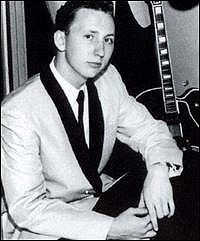

Interesting stuff about Bobby Emmons on the Funky16Corners blog...also photo of Bobby presumably taken in the early 60s...
http://funky16corners.blogspot.com/2006/01/memphis-organs-1965-1969.html
Wednesday, April 26, 2006
Dusty in Memphis
This is a link to the "Unofficial Homepage of Vocalist Dusty Springfield." Chapter 6 deals with her experience recording in Memphis at American Studios.
http://www.cpinternet.com/mbayly/mem.htm
By the way, the "Dusty in Memphis" recording ranks #89 in Rolling Stone Magazine's 500 Greatest Albums of All Time.
http://www.rollingstone.com/news/story/6598132/89_dusty_in_memphis
http://www.cpinternet.com/mbayly/mem.htm
By the way, the "Dusty in Memphis" recording ranks #89 in Rolling Stone Magazine's 500 Greatest Albums of All Time.
http://www.rollingstone.com/news/story/6598132/89_dusty_in_memphis
Memphis Magazine Article
This article on the American Rhythm Section appeared in Memphis Magazine's September '05 issue. Great job by journalist Eddie Hankins. This article is a must read! Really nice job...
http://blog.georgiamusic.info/American_Way.pdf
http://blog.georgiamusic.info/American_Way.pdf
Tuesday, April 25, 2006
Great Music Sample -- Courtesy of Wal-Mart
No kidding -- the folks at Wal-Mart know good music when they hear it! Go here to listen to a 30 second sample of Linda Lyndell's "What A Man".
Info (what little is known) on Linda Lyndell is here.
In 2001, music journalist Robert Bowman did an article on her for Oxford American's annual music issue (not available online).
Linda appeared at the Stax Museum for an Otis Redding Tribute in November 2005. She is now living in her home state of Florida but is not active in the music business.
Info (what little is known) on Linda Lyndell is here.
In 2001, music journalist Robert Bowman did an article on her for Oxford American's annual music issue (not available online).
Linda appeared at the Stax Museum for an Otis Redding Tribute in November 2005. She is now living in her home state of Florida but is not active in the music business.
The Masqueraders -- Very Cool Site
Here's a great site featuring the music of the Masqueraders. There are pictures of the original 45s of tunes they recorded at American in the sixties. Click on the 45 to play the selection. TIP: You have to have Real Audio installed in order to play these tunes. But I don't have Real Audio -- I don't like its very aggressive and intrusive behavior. I have Real Alternative on my computer and it's much more user friendly!
http://solidhitsoul.com/raders.html
You can download Real Alternative here:
http://www.free-codecs.com/download/Real_Alternative.htm
http://solidhitsoul.com/raders.html
You can download Real Alternative here:
http://www.free-codecs.com/download/Real_Alternative.htm
Interview with Chips Moman
*****[UPDATE: The below-referenced interview can be found here as of November 2016: http://soulfulmusic.blogspot.com/2016/11/my-2001-chips-moman-interview.html]*****
I conducted this interview with Chips Moman in the summer of 2001.
http://www.georgiamusic.info/2008/11/lagrange-native-
chips-moman-talks-about.html
I conducted this interview with Chips Moman in the summer of 2001.
http://www.georgiamusic.info/2008/11/lagrange-native-
chips-moman-talks-about.html
Sunday, April 23, 2006
Interview with Dan Penn and Spooner Oldham
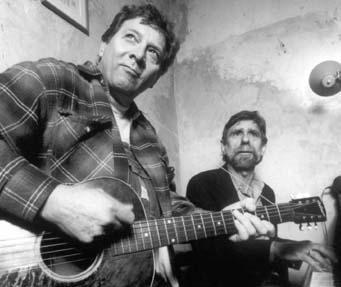
Here's a nice
interview with Dan Penn and Spooner Oldham. Joss Hutton conducted the interview for www.furious.com in 1998.
http://www.furious.com/PERFECT/pennoldham.html
Picture of American Sound Studios
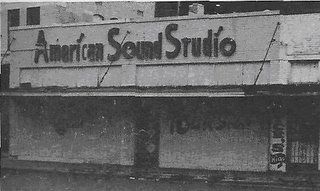 Here's a picture of American Sound Studios, which was located at 827 Thomas Street in Memphis, Tennessee. The building has been demolished, and there's a car lot there now (or so it's been said). This is where all that great music was recorded from the mid-sixties to the earlier seventies.
 The building was actually at the intersection of Chelsea and Thomas streets. Thomas Boulevard was a truck bypass route and so truckers stopped at the light and then took off in low gear. As a result, obtaining a noise-free recording was sometimes a challenge!
http://elvisland.blogspot.com/2006/01/american-sound-studios.html
Saturday, April 22, 2006
My Interview with Gene Chrisman

Here's a link to my interview with Gene Chrisman. Gene is a great drummer and a great guy and has played on a whole bunch of records. You know that dog sitting in front of the gramaphone that was RCA's trademark? Well, that dog was listening to a recording that Gene played on! I'm not kidding! :)
http://music.ngadata.com/chrisman.pdf
Solomon Burke talks about Dan Penn's Writing
Comments from Solomon Burke about Dan Penn's writing...
Burke still gets excited when he talks about the smorgasbord of songwriters who contributed to the project. Dan Penn ("Dark End of the Street," "I'm Your Puppet") wrote the pleading, deep soul title track.
"Dan wrote a song for me 35 years ago, which was a great record in my life," Burke says.
In 1967, Penn and his songwriting partner, Spooner Oldham, wrote "Take Me (Just As I Am)," which Burke recorded at American Studios in Memphis. Burke says, "To come back with a song as hot as 'Don't Give Up on Me,' it touched my soul immediately."
The above was excerpted from an article on www.anti.com (Solomon's current label). Bio of Solomon is here.
Burke still gets excited when he talks about the smorgasbord of songwriters who contributed to the project. Dan Penn ("Dark End of the Street," "I'm Your Puppet") wrote the pleading, deep soul title track.
"Dan wrote a song for me 35 years ago, which was a great record in my life," Burke says.
In 1967, Penn and his songwriting partner, Spooner Oldham, wrote "Take Me (Just As I Am)," which Burke recorded at American Studios in Memphis. Burke says, "To come back with a song as hot as 'Don't Give Up on Me,' it touched my soul immediately."
The above was excerpted from an article on www.anti.com (Solomon's current label). Bio of Solomon is here.
Article about Dan Penn & Spooner Oldham
Dan Penn & Spooner Oldham - the legendary partnership that helped shape the entire course of southern soul music – made a live album when they toured the UK as special guests of Nick Lowe in 1998.
That album, called 'Moments From This Theatre' and hailed at the time as "a master class with two great soul men", has long been unavailable. It is, however, now being reissued by Proper Records on Monday 17th April to coincide with Penn & Oldham's tour this summer. The dates - perhaps their last-ever shows in the UK - will be announced in the near future.
The masterfully understated album features soulfully intimate renditions of many of Penn & Oldham's hits, including "I'm Your Puppet," "Sweet Inspiration," "Do Right Woman, Do Right Man," "I Met Her in Church" and "Lonely Women Make Good Lovers" — 14 songs in all, nine of them Penn-Oldham collaborations.
'Moments' gives music lovers the opportunity to hear the hits stripped down to their essentials, with nothing but Penn's deeply soulful vocals and acoustic guitar and Oldham's Wurlitzer and occasional singing. With these two consummate musicians, that turns out to be more than enough to cast a spell.
"You can put me and Spooner in a band and we just disappear, and our songs disappear — within a band," says Penn. "That's why we decided to start playin' some gigs where it was just us, where we could show our songwriting."
A native of Vernon, Alabama, Penn moved to the Florence/Muscle Shoals area while still a teenager and assumed the role of lead vocalist in a local group calling itself the Mark V Combo. When asked what kind of music they played, Penn replies, "R&B, man. There wasn't no such thing as rock. That was somethin' you picked up and throwed." He laughs. "Or threw." It was around this time that he penned his first chart record, Conway Twitty's "Is a Bluebird Blue", and became friends with Oldham, whose given name is Dewey Lindon. During the early '60s, Penn began working with Rick Hall at Fame Studios in Muscle Shoals, first as a songwriter, and then as an artist under the names Lonnie Ray, Danny Lee, and finally Dan Penn.
Around that time, Oldham, who was then going to college in Florence, started cutting classes in order to hang around the studio, and, Hall, recognising the kid's keyboard chops, started hiring him for sessions. Oldham's reputation grew in this musical hotbed, and he worked at other local studios as well, playing the indelible organ part on Percy Sledge's "When a Man Loves a Woman"—not on a Hammond B3, as is generally thought, but on a Farfisa.
"He had it on low growl," Penn quips. "There's one of them settin' right here in my studio, because of that record." As the keyboard player in the Fame house band, working alongside guitarist Jimmy Johnson, bassist Junior Lowe and drummer Roger Hawkins, Spooner played on groundbreaking albums by Wilson Pickett and Aretha Franklin, among others.
While at Fame, Oldham left his imprint on the sound and evolution of southern soul music with his inimitable keyboard playing, but he turned out to be just as skilled and distinctive as a songwriter. In the evenings, after the sessions had ended, Oldham would hole up with Penn, who was engineering at Fame and had the key to the studio, on songwriting sessions, and both immediately became aware of what Penn describes as "some sort of chemical deal together," and that led to effort and inspiration. "We'd write two or three songs a night," says Penn. "We were young. We just wrote and wrote and wrote, and we put the demo down, too." Their early collaborations included "I'm Your Puppet," which became a hit in 1965 for James & Bobby Purify, and "Out of Left Field," performed so memorably by Sledge. These boys had a way with metaphor. Together and separately, the pair also wrote hits for Joe Simon, Jimmy Hughes and Wilson Pickett.
"I became a staff keyboard player, and then Dan and I became exclusive writers for Fame Publishing Co. for about three years," Oldham remembers. "It was sort of an in-house thing, where artists were comin' and goin', askin' for songs, and there was sort of a built-in opportunity to try to be commercial songwriters, which both of us wanted to be. So, as fate would have it, we were in a good place at a good time. And we enjoyed the process of writing. We'd demo it, just him and I putting it on tape that night — we'd be tired and worn out from our endeavors, and then, the next day, there was a whole band wantin' to play in the studio, and we'd get them to do the demo. So we'd live with those songs a couple days runnin'. And then, if we were lucky, maybe two or three weeks later, somebody might want to record it, and we'd get to play it again.
"We got a song or two on a lot of albums, and I got to play on all that stuff and have fun," Oldham continues. "And Dan was learning to engineer, partly because he had access to the equipment at night, and he and would do our demos. He was a songwriter who wanted to produce and engineer; I was a songwriter who wanted to play keyboards. So we had similar but different sidelines. And he was singin' a lot, and I was not singin' hardly ever. But we had a good rapport, and the piano-and-guitar thing seemed to work well. I liked piano and he liked guitar. He had a great way with words—not that I didn't participate in the words. He and I both participated in words and music, but he was really there from the gitgo with his approach to words. We never knew where it was gonna come from—an idea or him strummin' the guitar or me strummin' the piano. We had a kaleidoscope of approaches. We'd make it all work, it seemed like. Whatever angle it came from, we'd try to connect on the idea of the song or the chord changes. If we weren't interested, we'd just move on to another one real fast. We'd usually come up with a few ideas, sometimes only one, sometimes none. So we've approached it from all kind of ways."
Says Penn of their process: "When me and Spooner are doin' it, I usually write the lyrics down on paper 'cause he's got his hands full with the piano, so we just get one set of lyrics. That's what I use when I sing the demo, and I always sing the demo, which has helped us get a lot of cuts in the past. Not that I sung it properly, but I sung it to where people could understand it.
According to Penn, the reason people hear touches of country in his brand of R&B is "because I'm an old hillbilly myself. Took me about 30 years to find out I was still a hillbilly. But compared to R&B, country is much easier. You ain't got to struggle. Anybody can sing, 'Because you're mine, I walk the line.' Go try to write 'Out of Left Field'; go find all those chords and what all that means. So a hillbilly I am, but in the '60s I was pretty smart to love black music, 'cause there was a lot of it to love. I loved Jimmy Reed, Bobby Bland, Ray Charles, Little Milton, James Brown… I always respected the black singers because they were always there — we was trying to get there. Knowing that the black singers wanted my songs inspired me."
A number of their classics were written for particular singers. "'Sweet Inspiration' was written for the group the Sweet Inspirations, 'Cry Like a Baby' was written for Alex Chilton's first band, The Box Tops, 'Out of Left Field' was written for Percy Sledge," says Penn. "I either was involved in the production or I was real close to the production teams, so when you're in the middle of a clique, you got the power to either do it right, do it wrong or get out of the way and let somebody else do it.
"But you have an opportunity to score, and sometimes we scored. By that I mean comin' up with a song that was good enough to get on the session. And then, if it came out and was a hit, the score was really complete at that point. So first you had to get on the session, and then the big question was, did it come out? And then the next question was, is it the single? At least back then.
"Some of these songs weren't written that way. 'Do Right Woman' wasn't written for Aretha, nor 'Dark End of the Street' for James Carr. Me and Chips Moman just wrote those songs and we didn't have anybody in mind. We worked great together while we were together—we're so lucky to have those two songs—but we didn't stay together."
In 1967, Penn relocated to Memphis and began producing at Chips Moman's American Recording Studios, with Oldham joining him a few months later. While at American, Penn and Moman co-wrote "Do Right Woman, Do Right Man," which Franklin turned into a soul classic, along with "Dark End of the Street," stunningly recorded by James Carr, while Dan and Spooner came up with "Cry Like a Baby" for the Box Tops and later "A Woman Left Lonely," written at Dan's Beautiful Sounds Studio in Memphis, and chosen by Janis Joplin for her classic album Pearl.
When the golden age of southern soul came to an end, Oldham moved to California, where he played with artists like Jackson Browne, the Everly Brothers, Linda Ronstadt and the Flying Burrito Brothers.
Additionally, he played keyboards on a series of acclaimed albums by Neil Young, starting with 'Harvest' in 1972. In 2005, Young tapped Oldham as a linchpin player on his moving new album, 'Prairie Wind'. "He's so soulful and so gospel and so spiritual, he's playing from this special place,' Young says of Oldham. "He's so great, an amazing musician."
Penn and wife Linda relocated to Nashville in the '70s—where he recently co-wrote and produced Bobby Purify's comeback album, Better to Have It, in his basement studio. The session included Oldham on keyboards, naturally; alongside another of Penn's co-writers, Malaco keyboardist Carson Whitsett. The well-received album was released on Proper American in the summer of 2005. Oldham and his wife Karen have been living in Rogersville, Alabama — "close to home," he says—since 1991.
Penn and Oldham have now been friends and cohorts for nearly a half century. And 'Moments From This Theatre' celebrates, with characteristic understatement, this partnership for the ages, providing captivating evidence of their continuing "chemical deal together," which adds up to quiet brilliance.
* * *
Dan Penn talks about some of his hits:
I'm Your Puppet: "We'd done our usual, which was go get a barbecue plate or a burger. Then we came to the studio, and I had just bought a little 12-string guitar that sounded pretty good, so I just started playin' [voices the guitar line from the song], and Spooner just slid in with [he makes the familiar keyboard sound]. Next thing you know, we're into this song. I started writin' stuff down, we cut a little demo on it and me and Rick came up to Nashville and put some strings on it. Actually, it was a record that came out on me, I believe on MGM, but it was called 'The Puppet'—wasn't no 'Your.' My little record didn't do anything, and it went to the demo file. So when producer Don Schroeder brought the Purify brothers in, they went to the demo file and they picked that one out. When they started singin' it, they sang 'I'm your puppet'—they couldn't remember, I guess. And I didn't like it anyway; I thought it was too fast, kind of a rip-off of Sam & Dave, I thought. At least that's what I was thinkin' then. Later on, when it came out and became a hit, I loved it. It was easy to get on board later."
Out of Left Field: "People say it's a baseball metaphor, but I always think it's a farm metaphor, like an old tractor bringin' some hay in. The chords Spooner came up with and the places we went are kinda strange. I just love it 'cause it's a heck of a way to say 'She walked in out of nowhere.'"
Do Right Woman, Do Right Man: In January 1967, Atlantic's Jerry Wexler brought Aretha Franklin to Fame to record "I Never Loved a Man the Way I Love You." In an interview with British journalist Neil Rushton, Penn recalled the scene. "When she walked in she was like a young queen. Most of the guys in the studio pretended not to be paying too much attention to her, but they were looking at her from the corner of their eyes.
She appeared so calm, but I knew she was scared to death. She just sat down at the piano, calmly took a deep breath, lifted her hand up and then just hit the unknown chord! The instant she did that all the guys stopped eating or talking or whatever and just headed for their guitars and drums to play. You just knew history was going to be made that day."
Wexler okayed the recording of "Do Right Woman, Do Right Man' as a perfect b-side, provided that Penn was able to come up with a usable bridge on the spot. A few minutes into the job, Aretha came up to him. "She said, 'Dan, bay-bee, what you got?' I said, 'This is what I've got, Aretha: "They say it's a man's world, but you can't prove that by me,"' and she comes right back and says, 'I've got the next line: "As long as we're together baby, show some respect for me."' And I said, 'Thank you, Aretha.
But Wexler canceled the session the next day, choosing instead to continue cutting the rest of Aretha's album in New York. Since Moman was playing guitar on the sessions, Penn went along with him to New York. "We went to the Atlantic building up in the elevator and Jerry Wexler says, 'Dan, you and Chips come with me. He took us to the Atlantic studio control room and played us what they done to our little song. Aretha had redone the vocals, they had added her sisters (Erma and Carolyn) and I was hearing this big, big sound. It was astonishing, one of the most amazing moments in my life."
The Dark End of the Street: "We tracked at Hi, and a few weeks later we bought James Carr to American and did his vocal overdubs and I did some background vocals," Penn told Rushton. "We thought James was fantastic; he had made some good records before, and we knew we had made a good record. Did we realize it was going to become hailed as a masterpiece? Not really, but I liked the song and the record a lot. What did I think of Aretha's version? There are no other versions, not even mine!"
Now, Penn explains further: "I've heard other people sing it besides James Carr, but they weren't thinkin' about the lyric. I've heard a lot of 'heady' versions of it, a lot of singers that are mentally right up there, but you can tell that they're not thinkin' about those words. Singers shouldn't be thinkin' of anything except what that lyric means to him. And if that lyric don't mean nothin' to him, he shouldn't be cuttin' that song. That's why writers are so good when they sing their own songs—because those words actually meant somethin' to them somewhere along the line. Then you don't have a chance, really, to mess up. If you start thinkin', you're in trouble."
You Left the Water Running: "Otis Redding did a demo for me on 'You Left the Water Running,'" Penn told Rushton. "I got to be around him the day he cut Arthur Conley on 'Sweet Soul Music' at Fame. Otis was the most effective record producer I have ever seen."
Cry Like a Baby: "Everybody thinks I coaxed [Alex Chilton] into doing a lot of vocal tricks, but it's not true—he just had it. The only thing I ever told that young man to do was sing 'aeroplane' instead of 'airplane' on 'The Letter'—I was just tryin' to make it flow better.
"Anyway, we'd had a big hit on 'The Letter' [which Penn produced], and around 'Neon Rainbow,' the record company started talkin' about wantin' 'The Letter #2,' and I'd go, 'No, I don't do sequels.' I was pretty adamant, and still am, about that. But I did know we had to go uptempo. Nobody would send me any songs and nothin' was comin' to me, so I called Spooner and said, 'Spooner, we're gonna have to write this next Box Tops hit.' 'Ok. When do you wanna start?' I said, 'Well, tomorrow night.' 'OK.' We stayed in the studio two or three days, we'd write stuff down, tear it up. We were doin' everything we could to write a song—stayin' up, drinkin' coffee—but nothin' was happenin' and we were dead. So I said, 'Spooner, I guess we just need to go on home and forget about it. We just didn't catch any this time.' 'OK.'
"So we went over across the street to a place called Porky's to have a meal. We were sittin' there lookin' at each other all dejected, and Spooner just laid his head on the table and said, 'I could just cry like a baby.' I said 'That's it!' I'm sure my eyes must've flashed. I said, 'To hell with the food. Here's some money—just keep it.' By the time we got halfway across the street, I was already singin', 'When I think about the good love you gave me, I cry like a baby.' And then the key was in the lock to open the studio back up, and I said, 'Spooner, you run to the organ, piano or whatever you wanna play; I'll get the lights on and the gear runnin' again. So I got the lights on and he was crankin' up the little organ. I had the mike open, I got one of the machines going, I put on a reel of tape, went out into the studio and we wrote it before that reel of tape was done. After we did that, it was just like we'd had eight hours of sleep. Alex was supposed to be there the next morning at 10 o'clock, so my back was against the wall, and it was just like it dropped out of the sky. The pickers came in, I gave it to Alex, everybody loved it and we cut it in a few takes. So there's nothin' like right now. When you try your best, I think the Lord just gives you somethin', you know?" Penn adds, "I was so happy and proud to have produced 'Cry Like a Baby' another million seller."
http://blog.myspace.com/index.cfm?fuseaction=blog.view&friendID=38406486&blogID=103577342
That album, called 'Moments From This Theatre' and hailed at the time as "a master class with two great soul men", has long been unavailable. It is, however, now being reissued by Proper Records on Monday 17th April to coincide with Penn & Oldham's tour this summer. The dates - perhaps their last-ever shows in the UK - will be announced in the near future.
The masterfully understated album features soulfully intimate renditions of many of Penn & Oldham's hits, including "I'm Your Puppet," "Sweet Inspiration," "Do Right Woman, Do Right Man," "I Met Her in Church" and "Lonely Women Make Good Lovers" — 14 songs in all, nine of them Penn-Oldham collaborations.
'Moments' gives music lovers the opportunity to hear the hits stripped down to their essentials, with nothing but Penn's deeply soulful vocals and acoustic guitar and Oldham's Wurlitzer and occasional singing. With these two consummate musicians, that turns out to be more than enough to cast a spell.
"You can put me and Spooner in a band and we just disappear, and our songs disappear — within a band," says Penn. "That's why we decided to start playin' some gigs where it was just us, where we could show our songwriting."
A native of Vernon, Alabama, Penn moved to the Florence/Muscle Shoals area while still a teenager and assumed the role of lead vocalist in a local group calling itself the Mark V Combo. When asked what kind of music they played, Penn replies, "R&B, man. There wasn't no such thing as rock. That was somethin' you picked up and throwed." He laughs. "Or threw." It was around this time that he penned his first chart record, Conway Twitty's "Is a Bluebird Blue", and became friends with Oldham, whose given name is Dewey Lindon. During the early '60s, Penn began working with Rick Hall at Fame Studios in Muscle Shoals, first as a songwriter, and then as an artist under the names Lonnie Ray, Danny Lee, and finally Dan Penn.
Around that time, Oldham, who was then going to college in Florence, started cutting classes in order to hang around the studio, and, Hall, recognising the kid's keyboard chops, started hiring him for sessions. Oldham's reputation grew in this musical hotbed, and he worked at other local studios as well, playing the indelible organ part on Percy Sledge's "When a Man Loves a Woman"—not on a Hammond B3, as is generally thought, but on a Farfisa.
"He had it on low growl," Penn quips. "There's one of them settin' right here in my studio, because of that record." As the keyboard player in the Fame house band, working alongside guitarist Jimmy Johnson, bassist Junior Lowe and drummer Roger Hawkins, Spooner played on groundbreaking albums by Wilson Pickett and Aretha Franklin, among others.
While at Fame, Oldham left his imprint on the sound and evolution of southern soul music with his inimitable keyboard playing, but he turned out to be just as skilled and distinctive as a songwriter. In the evenings, after the sessions had ended, Oldham would hole up with Penn, who was engineering at Fame and had the key to the studio, on songwriting sessions, and both immediately became aware of what Penn describes as "some sort of chemical deal together," and that led to effort and inspiration. "We'd write two or three songs a night," says Penn. "We were young. We just wrote and wrote and wrote, and we put the demo down, too." Their early collaborations included "I'm Your Puppet," which became a hit in 1965 for James & Bobby Purify, and "Out of Left Field," performed so memorably by Sledge. These boys had a way with metaphor. Together and separately, the pair also wrote hits for Joe Simon, Jimmy Hughes and Wilson Pickett.
"I became a staff keyboard player, and then Dan and I became exclusive writers for Fame Publishing Co. for about three years," Oldham remembers. "It was sort of an in-house thing, where artists were comin' and goin', askin' for songs, and there was sort of a built-in opportunity to try to be commercial songwriters, which both of us wanted to be. So, as fate would have it, we were in a good place at a good time. And we enjoyed the process of writing. We'd demo it, just him and I putting it on tape that night — we'd be tired and worn out from our endeavors, and then, the next day, there was a whole band wantin' to play in the studio, and we'd get them to do the demo. So we'd live with those songs a couple days runnin'. And then, if we were lucky, maybe two or three weeks later, somebody might want to record it, and we'd get to play it again.
"We got a song or two on a lot of albums, and I got to play on all that stuff and have fun," Oldham continues. "And Dan was learning to engineer, partly because he had access to the equipment at night, and he and would do our demos. He was a songwriter who wanted to produce and engineer; I was a songwriter who wanted to play keyboards. So we had similar but different sidelines. And he was singin' a lot, and I was not singin' hardly ever. But we had a good rapport, and the piano-and-guitar thing seemed to work well. I liked piano and he liked guitar. He had a great way with words—not that I didn't participate in the words. He and I both participated in words and music, but he was really there from the gitgo with his approach to words. We never knew where it was gonna come from—an idea or him strummin' the guitar or me strummin' the piano. We had a kaleidoscope of approaches. We'd make it all work, it seemed like. Whatever angle it came from, we'd try to connect on the idea of the song or the chord changes. If we weren't interested, we'd just move on to another one real fast. We'd usually come up with a few ideas, sometimes only one, sometimes none. So we've approached it from all kind of ways."
Says Penn of their process: "When me and Spooner are doin' it, I usually write the lyrics down on paper 'cause he's got his hands full with the piano, so we just get one set of lyrics. That's what I use when I sing the demo, and I always sing the demo, which has helped us get a lot of cuts in the past. Not that I sung it properly, but I sung it to where people could understand it.
According to Penn, the reason people hear touches of country in his brand of R&B is "because I'm an old hillbilly myself. Took me about 30 years to find out I was still a hillbilly. But compared to R&B, country is much easier. You ain't got to struggle. Anybody can sing, 'Because you're mine, I walk the line.' Go try to write 'Out of Left Field'; go find all those chords and what all that means. So a hillbilly I am, but in the '60s I was pretty smart to love black music, 'cause there was a lot of it to love. I loved Jimmy Reed, Bobby Bland, Ray Charles, Little Milton, James Brown… I always respected the black singers because they were always there — we was trying to get there. Knowing that the black singers wanted my songs inspired me."
A number of their classics were written for particular singers. "'Sweet Inspiration' was written for the group the Sweet Inspirations, 'Cry Like a Baby' was written for Alex Chilton's first band, The Box Tops, 'Out of Left Field' was written for Percy Sledge," says Penn. "I either was involved in the production or I was real close to the production teams, so when you're in the middle of a clique, you got the power to either do it right, do it wrong or get out of the way and let somebody else do it.
"But you have an opportunity to score, and sometimes we scored. By that I mean comin' up with a song that was good enough to get on the session. And then, if it came out and was a hit, the score was really complete at that point. So first you had to get on the session, and then the big question was, did it come out? And then the next question was, is it the single? At least back then.
"Some of these songs weren't written that way. 'Do Right Woman' wasn't written for Aretha, nor 'Dark End of the Street' for James Carr. Me and Chips Moman just wrote those songs and we didn't have anybody in mind. We worked great together while we were together—we're so lucky to have those two songs—but we didn't stay together."
In 1967, Penn relocated to Memphis and began producing at Chips Moman's American Recording Studios, with Oldham joining him a few months later. While at American, Penn and Moman co-wrote "Do Right Woman, Do Right Man," which Franklin turned into a soul classic, along with "Dark End of the Street," stunningly recorded by James Carr, while Dan and Spooner came up with "Cry Like a Baby" for the Box Tops and later "A Woman Left Lonely," written at Dan's Beautiful Sounds Studio in Memphis, and chosen by Janis Joplin for her classic album Pearl.
When the golden age of southern soul came to an end, Oldham moved to California, where he played with artists like Jackson Browne, the Everly Brothers, Linda Ronstadt and the Flying Burrito Brothers.
Additionally, he played keyboards on a series of acclaimed albums by Neil Young, starting with 'Harvest' in 1972. In 2005, Young tapped Oldham as a linchpin player on his moving new album, 'Prairie Wind'. "He's so soulful and so gospel and so spiritual, he's playing from this special place,' Young says of Oldham. "He's so great, an amazing musician."
Penn and wife Linda relocated to Nashville in the '70s—where he recently co-wrote and produced Bobby Purify's comeback album, Better to Have It, in his basement studio. The session included Oldham on keyboards, naturally; alongside another of Penn's co-writers, Malaco keyboardist Carson Whitsett. The well-received album was released on Proper American in the summer of 2005. Oldham and his wife Karen have been living in Rogersville, Alabama — "close to home," he says—since 1991.
Penn and Oldham have now been friends and cohorts for nearly a half century. And 'Moments From This Theatre' celebrates, with characteristic understatement, this partnership for the ages, providing captivating evidence of their continuing "chemical deal together," which adds up to quiet brilliance.
* * *
Dan Penn talks about some of his hits:
I'm Your Puppet: "We'd done our usual, which was go get a barbecue plate or a burger. Then we came to the studio, and I had just bought a little 12-string guitar that sounded pretty good, so I just started playin' [voices the guitar line from the song], and Spooner just slid in with [he makes the familiar keyboard sound]. Next thing you know, we're into this song. I started writin' stuff down, we cut a little demo on it and me and Rick came up to Nashville and put some strings on it. Actually, it was a record that came out on me, I believe on MGM, but it was called 'The Puppet'—wasn't no 'Your.' My little record didn't do anything, and it went to the demo file. So when producer Don Schroeder brought the Purify brothers in, they went to the demo file and they picked that one out. When they started singin' it, they sang 'I'm your puppet'—they couldn't remember, I guess. And I didn't like it anyway; I thought it was too fast, kind of a rip-off of Sam & Dave, I thought. At least that's what I was thinkin' then. Later on, when it came out and became a hit, I loved it. It was easy to get on board later."
Out of Left Field: "People say it's a baseball metaphor, but I always think it's a farm metaphor, like an old tractor bringin' some hay in. The chords Spooner came up with and the places we went are kinda strange. I just love it 'cause it's a heck of a way to say 'She walked in out of nowhere.'"
Do Right Woman, Do Right Man: In January 1967, Atlantic's Jerry Wexler brought Aretha Franklin to Fame to record "I Never Loved a Man the Way I Love You." In an interview with British journalist Neil Rushton, Penn recalled the scene. "When she walked in she was like a young queen. Most of the guys in the studio pretended not to be paying too much attention to her, but they were looking at her from the corner of their eyes.
She appeared so calm, but I knew she was scared to death. She just sat down at the piano, calmly took a deep breath, lifted her hand up and then just hit the unknown chord! The instant she did that all the guys stopped eating or talking or whatever and just headed for their guitars and drums to play. You just knew history was going to be made that day."
Wexler okayed the recording of "Do Right Woman, Do Right Man' as a perfect b-side, provided that Penn was able to come up with a usable bridge on the spot. A few minutes into the job, Aretha came up to him. "She said, 'Dan, bay-bee, what you got?' I said, 'This is what I've got, Aretha: "They say it's a man's world, but you can't prove that by me,"' and she comes right back and says, 'I've got the next line: "As long as we're together baby, show some respect for me."' And I said, 'Thank you, Aretha.
But Wexler canceled the session the next day, choosing instead to continue cutting the rest of Aretha's album in New York. Since Moman was playing guitar on the sessions, Penn went along with him to New York. "We went to the Atlantic building up in the elevator and Jerry Wexler says, 'Dan, you and Chips come with me. He took us to the Atlantic studio control room and played us what they done to our little song. Aretha had redone the vocals, they had added her sisters (Erma and Carolyn) and I was hearing this big, big sound. It was astonishing, one of the most amazing moments in my life."
The Dark End of the Street: "We tracked at Hi, and a few weeks later we bought James Carr to American and did his vocal overdubs and I did some background vocals," Penn told Rushton. "We thought James was fantastic; he had made some good records before, and we knew we had made a good record. Did we realize it was going to become hailed as a masterpiece? Not really, but I liked the song and the record a lot. What did I think of Aretha's version? There are no other versions, not even mine!"
Now, Penn explains further: "I've heard other people sing it besides James Carr, but they weren't thinkin' about the lyric. I've heard a lot of 'heady' versions of it, a lot of singers that are mentally right up there, but you can tell that they're not thinkin' about those words. Singers shouldn't be thinkin' of anything except what that lyric means to him. And if that lyric don't mean nothin' to him, he shouldn't be cuttin' that song. That's why writers are so good when they sing their own songs—because those words actually meant somethin' to them somewhere along the line. Then you don't have a chance, really, to mess up. If you start thinkin', you're in trouble."
You Left the Water Running: "Otis Redding did a demo for me on 'You Left the Water Running,'" Penn told Rushton. "I got to be around him the day he cut Arthur Conley on 'Sweet Soul Music' at Fame. Otis was the most effective record producer I have ever seen."
Cry Like a Baby: "Everybody thinks I coaxed [Alex Chilton] into doing a lot of vocal tricks, but it's not true—he just had it. The only thing I ever told that young man to do was sing 'aeroplane' instead of 'airplane' on 'The Letter'—I was just tryin' to make it flow better.
"Anyway, we'd had a big hit on 'The Letter' [which Penn produced], and around 'Neon Rainbow,' the record company started talkin' about wantin' 'The Letter #2,' and I'd go, 'No, I don't do sequels.' I was pretty adamant, and still am, about that. But I did know we had to go uptempo. Nobody would send me any songs and nothin' was comin' to me, so I called Spooner and said, 'Spooner, we're gonna have to write this next Box Tops hit.' 'Ok. When do you wanna start?' I said, 'Well, tomorrow night.' 'OK.' We stayed in the studio two or three days, we'd write stuff down, tear it up. We were doin' everything we could to write a song—stayin' up, drinkin' coffee—but nothin' was happenin' and we were dead. So I said, 'Spooner, I guess we just need to go on home and forget about it. We just didn't catch any this time.' 'OK.'
"So we went over across the street to a place called Porky's to have a meal. We were sittin' there lookin' at each other all dejected, and Spooner just laid his head on the table and said, 'I could just cry like a baby.' I said 'That's it!' I'm sure my eyes must've flashed. I said, 'To hell with the food. Here's some money—just keep it.' By the time we got halfway across the street, I was already singin', 'When I think about the good love you gave me, I cry like a baby.' And then the key was in the lock to open the studio back up, and I said, 'Spooner, you run to the organ, piano or whatever you wanna play; I'll get the lights on and the gear runnin' again. So I got the lights on and he was crankin' up the little organ. I had the mike open, I got one of the machines going, I put on a reel of tape, went out into the studio and we wrote it before that reel of tape was done. After we did that, it was just like we'd had eight hours of sleep. Alex was supposed to be there the next morning at 10 o'clock, so my back was against the wall, and it was just like it dropped out of the sky. The pickers came in, I gave it to Alex, everybody loved it and we cut it in a few takes. So there's nothin' like right now. When you try your best, I think the Lord just gives you somethin', you know?" Penn adds, "I was so happy and proud to have produced 'Cry Like a Baby' another million seller."
http://blog.myspace.com/index.cfm?fuseaction=blog.view&friendID=38406486&blogID=103577342
Subscribe to:
Posts (Atom)


